Tshepiso Moropa Tomorrows/Today: Investec Cape Town Art Fair

What type of knowledge exists outside the boundaries of the archive? Which stories are preserved in the absence of documentation, or in documentation that is incomplete or suppressed? What can images convey when language can only partially recall?
As Patricia Hayes and her co-authors have noted, “photography in African contexts must be understood as a historical subject in its own right, one that resists easy categorisation and invites persistent reinterpretation.” This approach encourages us to consider photographs beyond historical or documentary records, and instead as spaces where memory, imagination, and history are open to rereading. Tshepiso Moropa’s practice operates within this consideration, using photographs as both the means of storytelling and locus of recollection.
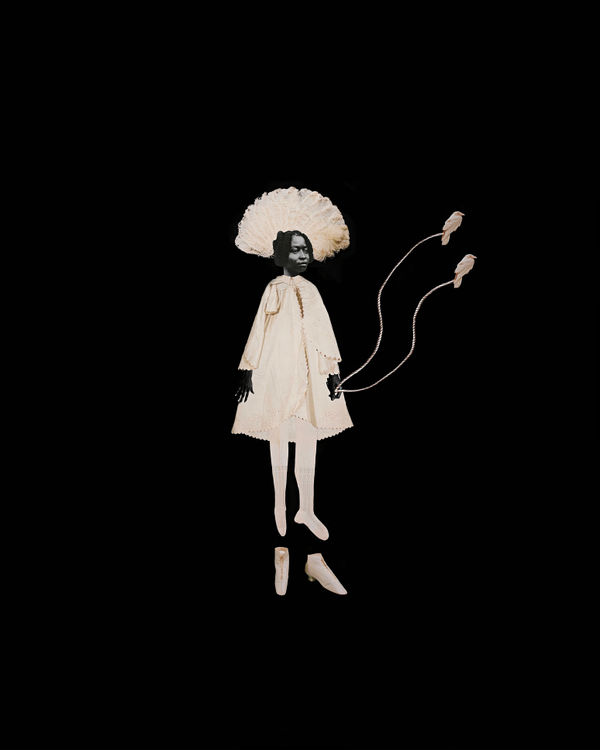
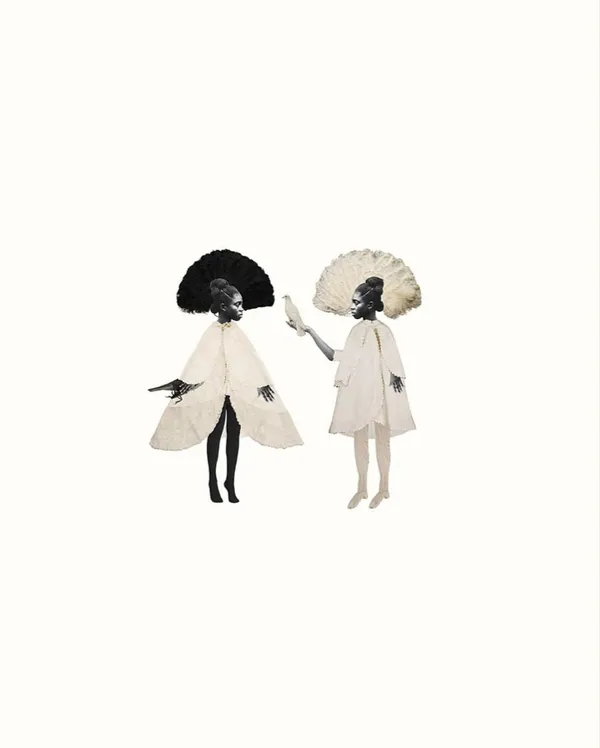
Moropa uses collage as her primary medium and draws from Dinaane (Setswana folktales) and Ditoro (dreams) as related frameworks of knowledge. These systems organise and transmit memory, inheritance, and imagination rather than narrative sources to be illustrated. Storytelling in Setswana oral traditions is resistant to closure, instead, Dinaanedevelops through ambiguity, repetition, and detour. Endings are left open, and characters reappear changed. Moropa constructs overlapping temporalities, hovering archival fragments, where meaning circulates rather than concludes.
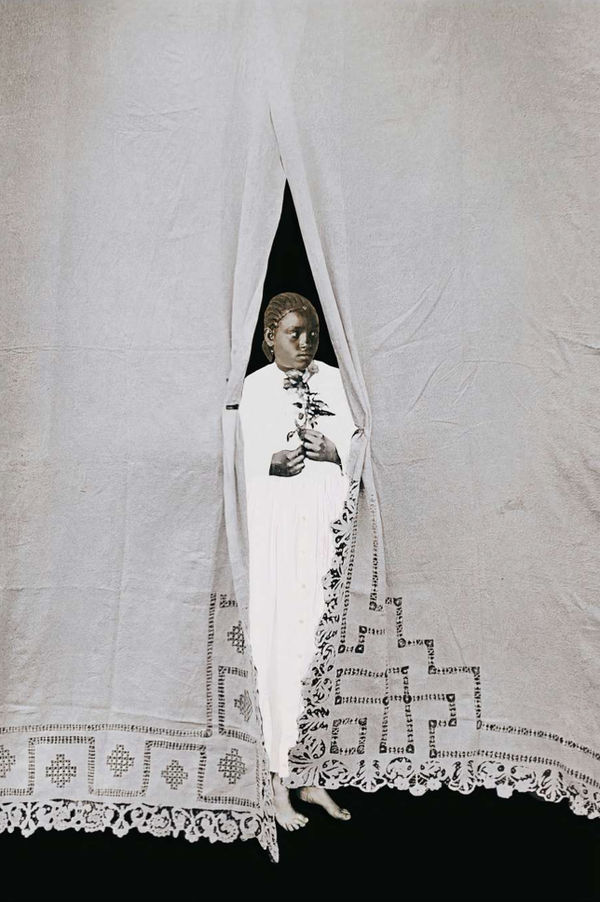
For Moropa, collage serves as both a method and a medium. She challenges photography's claim to stable truth by cutting, layering, and sampling personal and found archival material. The image becomes speculative, susceptible to disruption, paradox, and creativity.
Folktales function as a parallel mode of knowledge with dreams. Here, dreaming is a communicative space where ancestral presence becomes apparent and temporal boundaries vanish. In Moropa’s practice, Ditoro ga di tle fela (dreams are not random). This transitional state is inhabited by the disembodied and suspended figures that appear frequently in Moropa's artworks, pointing to different temporalities and inherited modes of comprehension.
Moropa safeguards personal archives in her practice, where family photos are embedded in relationships, commitments, and consent rather than as objective objects. Here, knowledge is situated and shared. Instead of being a static record, the archive becomes a living, negotiated space that is shaped by responsibility and care.
Presented within Tomorrows/Today at the Cape Town Art Fair with THK Gallery, Moropa's work alludes to futures that are shaped by careful inheritance rather than just rupture. Moropa poses Dinaane and Ditoro as dynamic, inventive powers that have the power to influence present and future imaginaries. Her images remain open, provisional, and in motion, asking not to be resolved, but to be returned to, again and again.