-
. RE .. HOMED ...
Philip Emde
-
LOOK. PAUSE. RETURN. REDISCOVER
The ordinary can be deceptive. What appears to be familiar can have histories, gestures, and emotions that transcend the ordinary.
-
At THK Gallery, Thomas Wachholz’s ZackZack and Philipp Emde’s . RE.. homed ... coexist in the same space as parallel solo exhibitions, each artist’s voice contributing to the conversation, each transforming the ordinary into a space of reflection, play, and wonder.
-
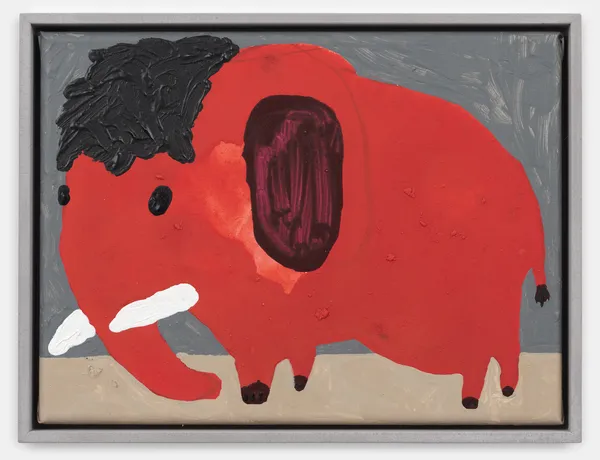
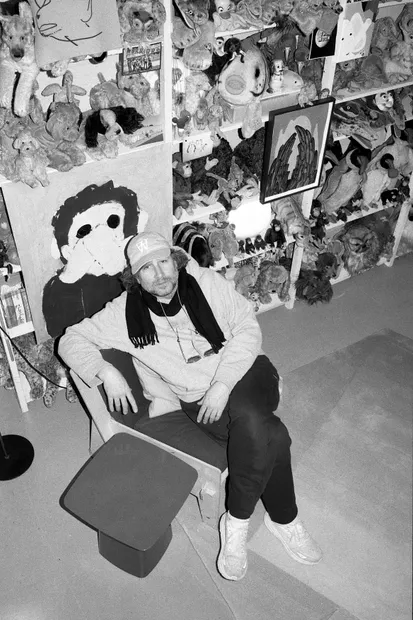
Emde's . RE .. homed ... works with the language of narrative play and emotional intimacy. Worn and weathered Steiff animals, arranged in a new and imaginative tableaux of narrative play, are depicted within his paintings. The naive aesthetic of his paintings brings to mind innocence and simplicity. By using these broken and everyday objects, Emde attempts to explore memory and emotion, and to encourage the viewer to think differently about beauty, care, and the everyday.
-
His works attempt to walk a fine line between playfulness and critique, creating immersive visual environments where images, words, and objects combine to create new meanings. In his use of color, narrative, and performance, Emde's works subvert the boundaries between medium and content in his own unique language that is at once humorous, provocative, and contemplative.
-

-
-
Both practices focus our gaze on the invisible life of objects, on the way in which, once handled, kept, or recalled, they begin to transcend their original use. Thus, we might understand their works as being in opposition to the notion that objects are used as tools for use. Instead, they might be thought of as containers, as witnesses to the actions, events, and moments that have passed through them. This idea can be seen in relation to the thoughts of Jean Baudrillard, who, in The System of Objects, wrote that “objects are part of systems of meaning that transcend their instrumental function. They are signs, circulating in networks of memory, context, and cultural association. In this respect, the ordinary is itself an area of interpretation.”
-
Both the exhibitions are about the idea that looking is an active process. Stop, look again, look again from different angles. Fast and slow, structure and play, memory and imagination come together and create the realization that the everyday is not static, not neutral, not secure.
-
-
-