-
ZackZack
Thomas Wachholz -
Look. Pause. Return. Rediscover.
-
The ordinary can be deceptive. What appears to be familiar can have histories, gestures, and emotions that transcend the ordinary.
-
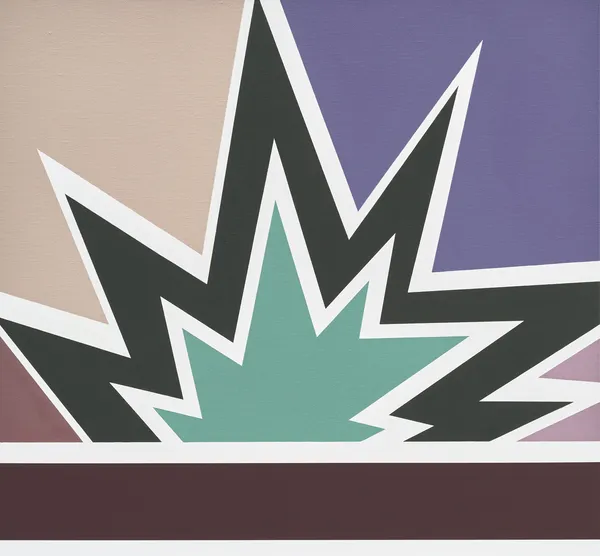
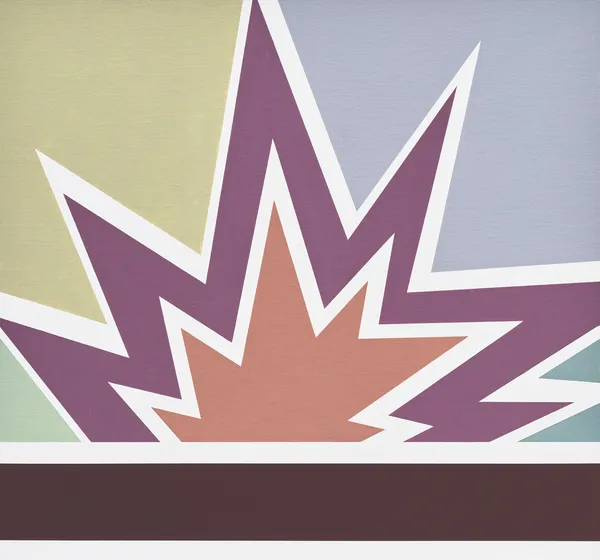
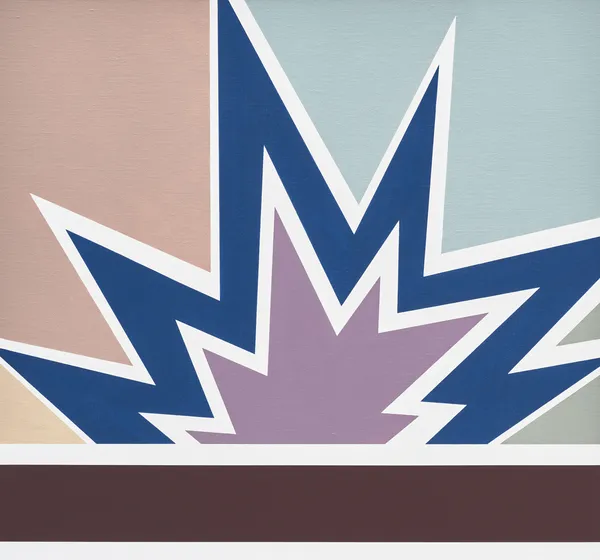
Wachholz’s ZackZack style is marked by his formal language of colour fields, geometric structures, and graphic motifs. The presence of stars, lines, and symbolic forms underscores the immediacy of visual signs, while the tactile qualities of the works, including unusual materials such as red phosphorus, impart a physical quality to the works that disrupts formal simplicity.
-
The ordinary can be deceptive. What appears to be familiar can have histories, gestures, and emotions that transcend the ordinary. At THK Gallery, Thomas Wachholz’s ZackZack and Philipp Emde’s . RE.. homed ... coexist in the same space as parallel solo exhibitions, each artist’s voice contributing to the conversation, each transforming the ordinary into a space of reflection, play, and wonder.
-
Wachholz’s bronze sculptures of oversized matchsticks take his language into three-dimensional space, capturing the instant of ignition and motion. The title of the exhibition, ZackZack, is German for “swift, resolute action,” underscoring the dynamism, rhythm, and conceptual clarity of Wachholz’s style. This exhibition, his second in Cape Town, marks Wachholz’s ongoing investigation into the potential of abstraction to convey moments of time, gesture, and physical intensity at once. Wachholz’s work explores the process by which everyday objects such as matchboxes and matchbooks come to be invested with personal memory and physical history.
-
-
-
Both practices focus our gaze on the invisible life of objects, on the way in which, once handled, kept, or recalled, they begin to transcend their original use. Thus, we might understand their works as being in opposition to the notion that objects are used as tools for use. Instead, they might be thought of as containers, as witnesses to the actions, events, and moments that have passed through them. This idea can be seen in relation to the thoughts of Jean Baudrillard, who, in The System of Objects, wrote that “objects are part of systems of meaning that transcend their instrumental function. They are signs, circulating in networks of memory, context, and cultural association. In this respect, the ordinary is itself an area of interpretation.”
-
Both the exhibitions are about the idea that looking is an active process. Stop, look again, look again from different angles. Fast and slow, structure and play, memory and imagination come together and create the realization that the everyday is not static, not neutral, not secure.
-
-
-
-