• A Grammar of Belonging

  •  


    What does it mean to belong when belonging is inherited, negotiated, and continually remade?


  • A Grammar of Belonging presents a group of artists who examine belonging as articulated through site-responsive materials, including sand and clay, found photographs,  personal archive - both visual and sonic - and shared traditions of making. Their works reference generational fabrics and patterns, folklore, ancestral plains, quiet interiors, notions of territory and portraits of connection. Proposing belonging as a condition shaped through intimacy, inheritance, relation, and the complex construction of identity.

  •  


    The exhibition considers belonging not as a fixed site but as a lived and layered experience, shaped by place, by those who inhabit it, and by the memories it carries. Belonging is approached as a space imbued with identity—a state to which we return and through which we are reminded of ourselves.

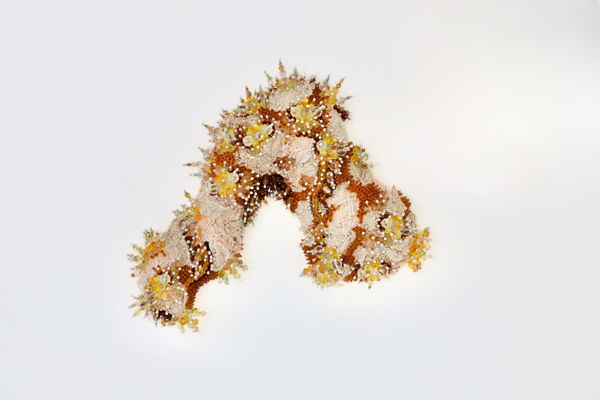
    • Sahlah Davids Delicate I, 2026 82 x 56 x 22 cm Mixed media assemblage
      Sahlah Davids
      Delicate I, 2026
      82 x 56 x 22 cm
      Mixed media assemblage
    • Sahlah Davids Delicate II, 2026 82 x 56 x 22 cm Mixed media assemblage
      Sahlah Davids
      Delicate II, 2026
      82 x 56 x 22 cm
      Mixed media assemblage
  • Trevor Stuurman, A Grammar of Belonging, 2018/2026

    Trevor Stuurman

    A Grammar of Belonging, 2018/2026
    Modified Bicycle Parts, Beadwork, and Springbok Seat
    164 x 164 x 45 cm
  •  

    Their works reference generational fabrics and patterns, folklore, notions of home and place, and portraits of connection—proposing belonging as a condition shaped through intimacy, inheritance, relation, and the complex construction of identity. 


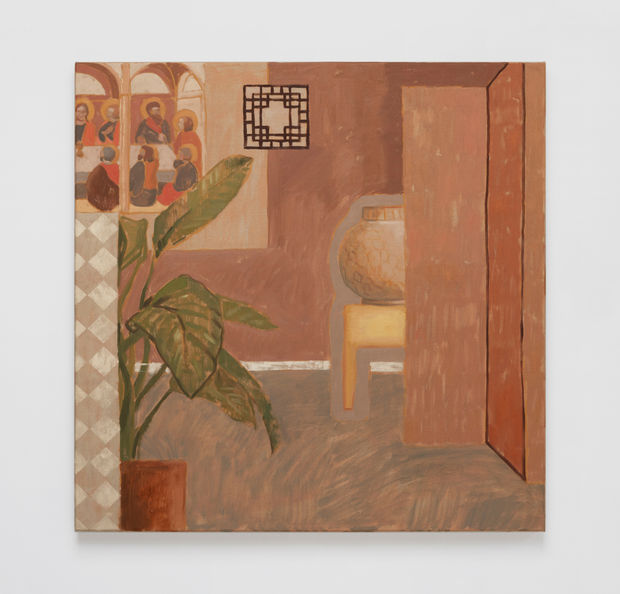
  • Kayoon Anderson, Interior with folding screen, 2024

    Kayoon Anderson

    Interior with folding screen, 2024
    Oil on linen
    70 x 70 cm
  • At once physical and emotional, it is a point of communion and generational exchange, informed by oral traditions and linguistic inheritance. It is kinship and care, where bread is broken and love is practiced, and where play, interiority, and joy persist.
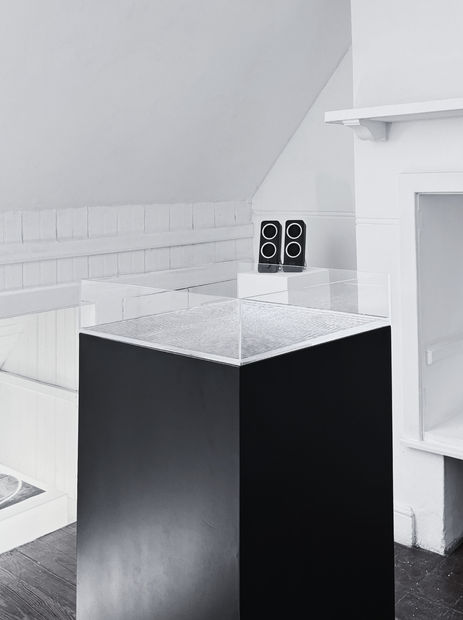
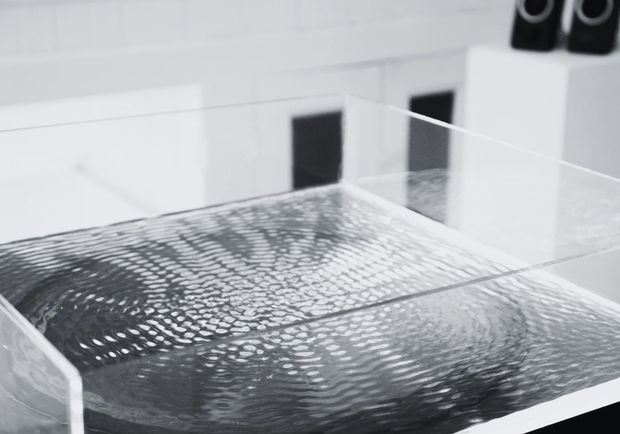
  • Resego Sefora, Sonic Plinth, 2025 Resego Sefora, Sonic Plinth, 2025

    Resego Sefora

    Sonic Plinth, 2025

    When sound travels through distance, screens, and shared messages, heritage becomes something lived in motion.

  • About the Artists About the Artists About the Artists About the Artists About the Artists About the Artists About the Artists About the Artists About the Artists About the Artists

    About the Artists

    Tshepiso Moropa (b. 1995) is a self-taught collage artist based in Johannesburg, South Africa. With an academic background in Psychology, Linguistics, and Research, her artistic practice engages deeply with African historical archives, particularly those reflecting Black life and womanhood. Moropa’s work begins in fragments: archival images, memories, folktales, and dreams, which she assembles into hand-crafted collages that feel at once ancient and futuristic, personal and collective. Working across both digital and analogue forms, she constructs visual narratives that reimagine the archive not as a fixed record but as a living and evolving space of possibility. Rooted in the oral traditions of her childhood, her compositions carry the emotional weight of stories passed down through generations, using symbolism, repetition, and abstraction to explore ancestral knowledge, inherited memory, and the dreamlike spaces where these ideas converge.


    Sahlah Davids (b. 1998) is a Cape Town-based visual artist whose practice centers on textiles and beadwork. In her studio practice, Sahlah Davids uses a material language of textiles, upholstery, and needleworking to explore the oral histories of her heritage and strong affiliation to the realm of religiopolitics. Cape Town born and raised, Davids has described her methods of creation as the product of the blended learning and trades of the Cape Muslim community, specifically the elders within her family.


    Driaan Claassen (b. 1991) in Johannesburg, South Africa is renowned for his deep exploration of the human psyche through intricate and thought-provoking sculptures. His artistic journey began with a fascination for 3D animation, which eventually led to an apprenticeship with the esteemed artist Otto du Plessis at the Bronze Age Foundry. This experience profoundly shaped Claassen’s unique approach, blending traditional craftsmanship with modern technology to create works that are both intellectually engaging and visually compelling. His work reflects a deep fascination with themes of consciousness, order, and chaos, often employing a meticulous combination of ancient techniques and cutting-edge technology. Through this approach, he challenges viewers to contemplate the  interplay between the material world and the inner workings of the mind.


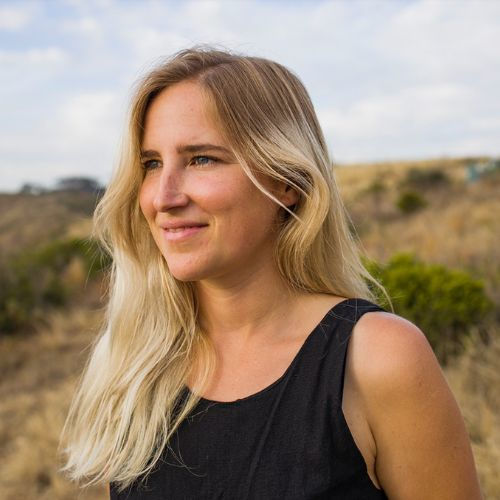
    Amy Rusch (b. 1990) is a Cape Town-based multidisciplinary artist whose practice spans diverse mediums. Her work explores a vibrational expression of mark-making through stitched threads on layers of found plastic bags. The layering of plastic, shaped by the motion and soundscape of the stitching process, reflects both the aural and material aspects of contemporary culture. The threads serve as an attempt to connect and comprehend the vastness of stratigraphic time, stretching across millions of years.


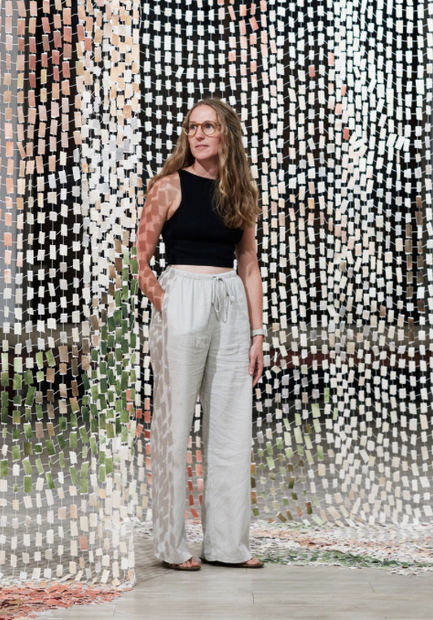
    Karla Nixon (b. 1990) is a visual artist based in Durban, South Africa, whose practice draws primary impetus from direct material exploration, with paper at its core. She constructs  images and objects responding to her surrounding environments-urban, domestic, and natural-by hand-cutting, tearing, sculpting, and reassembling. Her work is grounded in an ongoing investigation of how colour, texture, and fragmentation operate as a language of presence shaping sensorial and emotional encounters.


    Trevor Stuurman (b. 1992) an internationally acclaimed, award-winning visual artist, creative director, and media entrepreneur. Blurring the lines between subject and observer, Stuurman’s body of work explores the role of young African artists and the power of digital media in shaping contemporary African identity. Described by CNN’s African Voices as “a cultural force,” his work challenges representation while celebrating a vibrant and unapologetic vision of Africa.


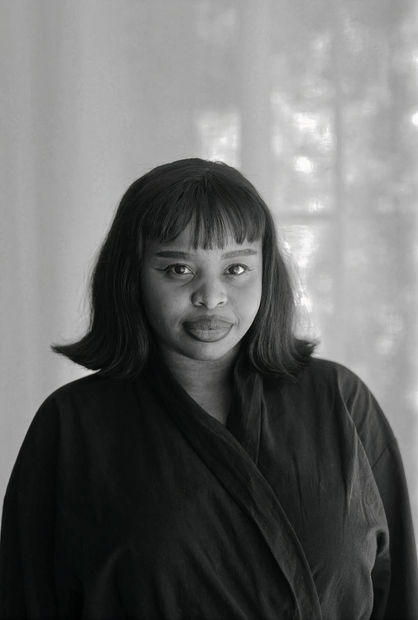
    Resego Sefora (b.  2003) is a fine artist based in Cape Town, South Africa. Working primarily with photograms and sonic installations, Sefora’s practice is centred on interpretations of belonging, predominantly expressed through sonic responses, and alternative photographic techniques. Sefora considers her artistic practice to be an investigation into sonic materiality and its capacity to function as language. She draws on its sonic registers as a carrier of voice, recognising it as an early and formative encounter with sound as a collective, unifying force.


    Joëlle Joubert (b. 2000)  is a visual artist who lives and works in Cape Town, South Africa.

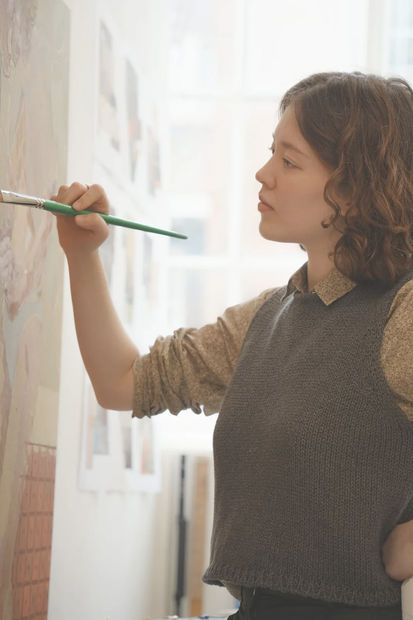
     Her practice is rooted in painting but expands across mediums: drawing, photography, and found imagery are folded into richly layered canvases that probe the emotional weight of concealment, vulnerability, and sentimental attachment. Her compositions often emerge from processes of strategic veiling and accumulation, reflecting on the tender thresholds between exposure and protection, public and private, memory and sensation.