-
The File Cannot Be Restored
nicola brandt
sahlah davids
TSHEPISO MOROPA
-
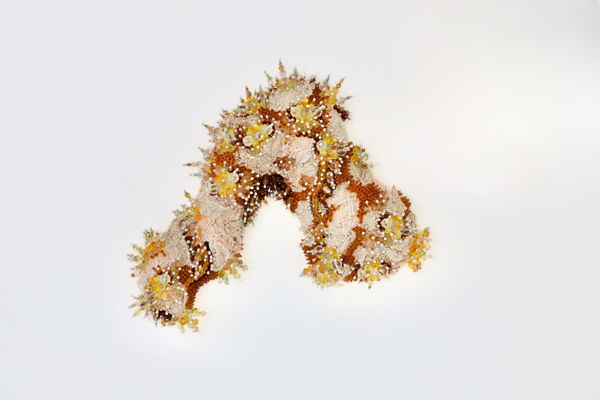
The File Cannot Be Restored borrows the language of digital failure to question the idea that history can simply be undone. Responding to HEAT Festival's theme, Ctrl + Z, the exhibition brings together the work of Nicola Brandt, Tshepiso Moropa and Sahlah Davids, tracing the ways the past continues to shape the present through landscapes, inherited traditions, memory and everyday acts of making.
Working across photography, collage and textile assemblage, the artists engage with colonial histories, cultural inheritance, spiritual memory and ecological change. Their practices begin with fragments: archival images, family histories, found materials and places marked by time. Rather than treating these as evidence of loss alone, they transform them into new forms that speak to continuity as much as rupture.
At its heart, The File Cannot Be Restored proposes that history is never fixed. It is layered, incomplete and continually rewritten through the lives we inherit and the futures we imagine.
-
-
Brandt’s work has been presented at institutions including MAXXI Museum (Italy), Würth and MARKK Museums (Germany), the Rhodes Trust (UK), the Nirox Foundation (South Africa), and the National Art Gallery of Namibia. She holds a DPhil in Fine Art from the University of Oxford and is the author of Landscapes between Then and Now (Bloomsbury, 2020) and The Distance Within (Steidl, 2025). Her practice has contributed to diplomatic cultural dialogue, including intergovernmental talks between Namibia and Germany.
-
“When we would meet, Kakuekuee and Katuvangua would often wear the dis-
tinctive Victorian-influenced garment originally introduced by German
missionaries and subsequently claimed, transformed, and imbued with new
meaning. Together, we carried these garments into the heavily charged
landscapes of Namibia”
-
-
-
Sahlah Davids holds a Bachelor of Fine Arts from Michaelis School of Fine Arts, University of Cape Town, and recently completed her Master’s degree in Urban Design. She hopes to combine her streams of research and artistic practice to create community orientated city spaces with human and ecological learning and trades of the Cape Muslim community, needs at the forefront.
-
“It was the exploration of fabrics, textures, beads and pins, unpicking this history, although uncomfortable, although kind of triumphant in many ways, that they all kind of come together to make the origins of who we are and how we exist, whether good or bad, but they exist.”
-
Moropa has received significant accolades, including the Out of Africa Award (2022), Contemporary African Photography Prize (2024) and the V&A Parasol Foundation Prize for Women in Photography (2025). She has garnered notable international attention, and has been included in presentations at Paris Photo, with Michael Hoppen Gallery, in From the Ground Up, Galleri Image, Denmark; and at 1-54 London with THK Gallery.
-
-
My work is informed by the timeless wisdom, moral lessons and magical elements found within Sestwana stories. Each folktale carries a unique blend of history, cultural values and human experience, serving as a wellspring of inspiration. Beyond its aesthetic and storytelling dimensions, Dinaane is driven by a desire to preserve Setswana folklore and celebrate the cultural heritage of the Setswana people.”
-
-